
Underground plumbing
Pool plumbing pressure testing
Some of the most expensive pool leaks are the ones you cannot see: a cracked pipe under the deck between the pool and the equipment. Pressure testing tells us which line is leaking, so nobody has to dig to find out.
- Every line tested separately
- Finds leaks under concrete
- No digging to search
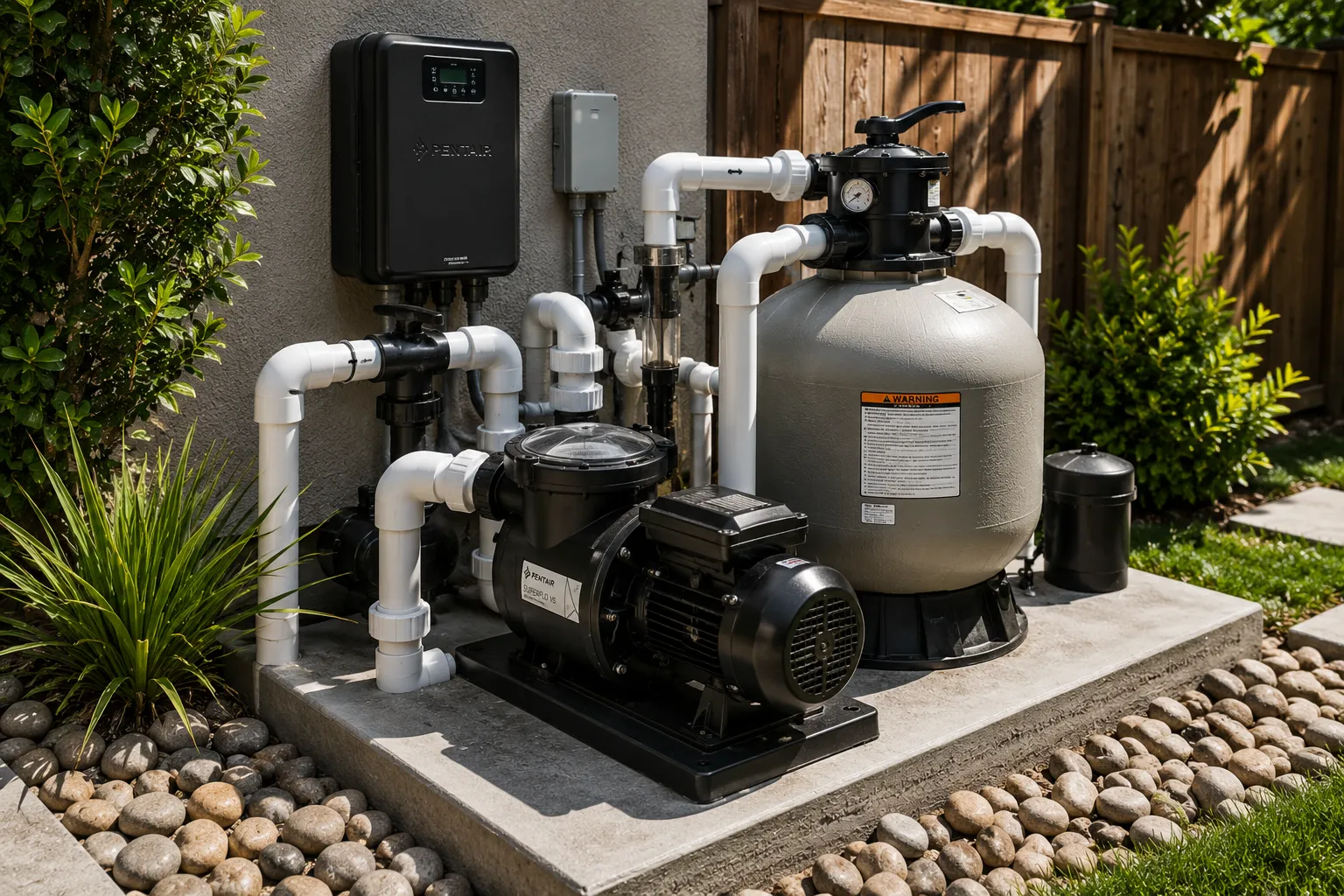
How pressure testing works
We plug each line at the pool end, connect a gauge at the equipment end, and pressurize it. A line that holds pressure is sound. A line that loses pressure is leaking.
Once we know which line is leaking, electronic listening equipment pinpoints where along that line the water is escaping, so any repair is limited to one small area.
Lines we test
- Skimmer and main drain suction lines
- Return lines
- Spa jet, air and spillway lines
- Cleaner and booster pump lines
- Auto-fill and water feature lines
When you need it
Pressure testing is part of almost every leak detection we do. It matters most when the pool loses more water with the pump running, which points to a leak on the return side, or more with it off, which often points to the suction side.
Frequently asked questions
- Is pressure testing safe for old plumbing?
- Yes. Lines are tested at controlled pressures suited to pool plumbing. If a line is already failing, the test finds it; it does not cause it.
- Do you have to break concrete to pressure test?
- No. Testing is done from the pool fittings and the equipment pad. Concrete only comes up if a repair needs it, and only where the leak is.
Losing water? Let’s find out where.
Call us or request a quote. We will ask a few questions about what you are seeing and get you on the schedule.
Serving San Diego, South OC and Southwest Riverside since 2021 · Satisfaction guaranteed